
In March 2026, a 47-year-old paralegal in Chicago lost her $78,000/year job to an AI system. Six weeks later, she got hired for a new role she’d never heard of: “AI Workflow Auditor.” Her new salary? $145,000.
Stories like hers are happening across America right now — but the news isn’t reporting them honestly.
The truth is brutal but freeing: AI is replacing certain jobs faster than predicted, while simultaneously creating high-paying roles that didn’t exist 12 months ago. The Americans who understand this shift are getting richer. The ones ignoring it are getting left behind.
In this guide, I’ll show you the 15 jobs being automated by 2027, the 10 new careers paying $100K+ that AI is creating, and exactly how to position yourself on the right side of this shift.
Quick Answer: AI will replace data entry clerks, telemarketers, basic customer service reps, paralegal researchers, bookkeepers, and 10 other jobs by 2027. Meanwhile, AI is creating new high-paying roles like AI Trainers ($120K), Prompt Engineers ($150K), AI Ethics Officers ($180K), and AI Workflow Auditors ($145K) that didn’t exist 18 months ago.

The Brutal Reality Check (Before We Start)
Let’s get real for a second.
According to Goldman Sachs research, 300 million jobs globally are at risk of AI automation by 2030. The World Economic Forum predicts 85 million jobs will be displaced by 2027 — but 97 million new jobs will be created.
The math is hopeful, but the timing is brutal: the new jobs won’t go to the same people who lost the old jobs — unless you proactively reskill.
Here’s what’s different about 2026: We’re past the “AI will eventually do this” phase. We’re now in the “AI is doing this right now” phase. The data is no longer speculation — it’s payroll reports, layoff announcements, and earnings calls.
Let me walk you through what’s actually happening.
🤖 Part 1: The 15 Jobs AI Is Replacing by 2027
1. Data Entry Clerks
Current US Salary: $35,000-$48,000
Replacement Speed: ⚡⚡⚡⚡⚡ (Already happening)
Why: AI agents can now read documents, extract data, and populate databases with 99.7% accuracy. What took a human 4 hours takes AI 47 seconds.
Real example: A major insurance company in Ohio cut 1,200 data entry positions in Q1 2026. They replaced them with an AI system that costs $48,000/year total.
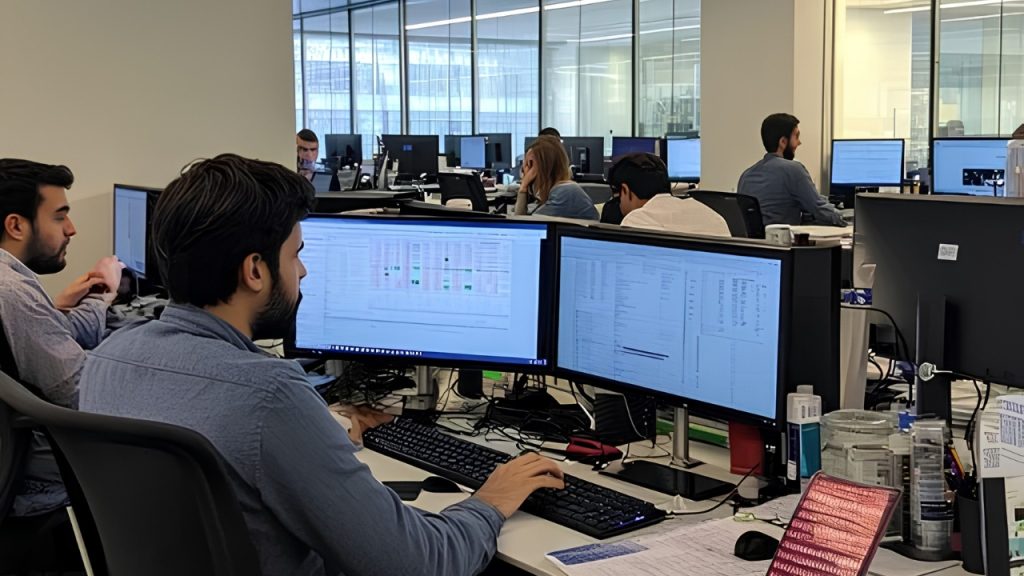
2. Telemarketers
Current US Salary: $30,000-$45,000
Replacement Speed: ⚡⚡⚡⚡⚡
Why: AI voice agents like ElevenLabs and Synthflow now sound 100% human. They can handle objections, adapt their pitch, and even hear emotional cues.
Real example: SaaS companies are using AI agents that make 1,000 calls per day at $0.04 per minute. Conversion rates? Often higher than humans.
3. Basic Customer Service Representatives
Current US Salary: $32,000-$50,000
Replacement Speed: ⚡⚡⚡⚡
Why: 70-80% of customer service tickets are repetitive. AI handles them faster, in any language, 24/7, without breaks.
What’s safe: Complex problem-solving, escalations, and emotional support roles will remain human.
4. Bookkeepers (Basic Tasks Only)
Current US Salary: $42,000-$58,000
Replacement Speed: ⚡⚡⚡⚡
Why: AI now categorizes transactions, reconciles statements, and generates reports without human input. QuickBooks AI alone has automated 60% of basic bookkeeping tasks.
What’s safe: CPAs, tax strategists, and forensic accountants are MORE in demand than ever.
5. Paralegal Researchers
Current US Salary: $55,000-$78,000
Replacement Speed: ⚡⚡⚡⚡
Why: Legal AI tools like Harvey and CoCounsel can read 10,000 case files in minutes. They draft contracts, find precedents, and summarize depositions faster than humans.
What’s safe: Litigation paralegals and client-facing legal work remain protected.
6. Translators (Standard Languages)
Current US Salary: $48,000-$72,000
Replacement Speed: ⚡⚡⚡⚡
Why: ChatGPT, DeepL, and Google Translate now produce translations indistinguishable from humans for 95% of business content.
What’s safe: Literary translation, legal certification, and rare language pairs still need humans.
7. Travel Agents (Basic)
Current US Salary: $38,000-$55,000
Replacement Speed: ⚡⚡⚡
Why: AI agents can now plan complete itineraries, book flights, and handle changes — often with better deals than human agents.
What’s safe: Luxury travel planning and corporate travel coordination remain human.
8. Bank Tellers
Current US Salary: $34,000-$42,000
Replacement Speed: ⚡⚡⚡⚡
Why: Mobile banking + AI assistants handle 90% of teller tasks. Major US banks have closed thousands of branches in 2025-2026.

9. Proofreaders & Basic Editors
Current US Salary: $42,000-$58,000
Replacement Speed: ⚡⚡⚡⚡
Why: Grammarly, ChatGPT, and Claude catch errors faster and more accurately than human proofreaders. Professional editing tools using GPT-5 are now standard.
What’s safe: Developmental editors and substantive editors who shape narrative remain valued.
10. Stock Traders (Standard Roles)
Current US Salary: $80,000-$150,000
Replacement Speed: ⚡⚡⚡⚡⚡
Why: AI trading systems have replaced most standard trading desks at major banks. Algorithms execute millions of trades per second based on real-time data.
What’s safe: Wealth management, advisory roles, and complex derivatives still need humans.
11. Insurance Underwriters
Current US Salary: $65,000-$95,000
Replacement Speed: ⚡⚡⚡
Why: AI assesses risk faster and more accurately by analyzing thousands of data points instantly. Major insurance companies have automated 70% of underwriting.
12. Tax Preparers (Basic)
Current US Salary: $42,000-$72,000
Replacement Speed: ⚡⚡⚡⚡
Why: TurboTax, H&R Block, and other platforms now have AI that handles complex returns. Most middle-class Americans no longer need a human tax preparer.
What’s safe: CPAs handling complex business taxes, audits, and tax planning remain in high demand.
13. Receptionists & Schedulers
Current US Salary: $32,000-$42,000
Replacement Speed: ⚡⚡⚡⚡
Why: AI scheduling assistants like Calendly + AI agents have replaced most basic reception tasks. Companies are saving $30K-$50K per replaced position.
14. Content Writers (Basic SEO Articles)
Current US Salary: $42,000-$65,000
Replacement Speed: ⚡⚡⚡⚡
Why: ChatGPT, Claude, and Jasper produce SEO articles faster and cheaper. Companies needing 100 articles/month no longer hire writers — they hire 1 editor.
What’s safe: Investigative journalists, brand storytellers, and personality-driven writers actually paid MORE now.

15. Junior Software Developers (Code-Only Roles)
Current US Salary: $75,000-$110,000
Replacement Speed: ⚡⚡⚡⚡
Why: GitHub Copilot, Cursor, and Claude Code generate 80% of basic code. Senior developers using AI now do the work of entire teams.
Per The Information, Uber engineers using Claude Code blew through their entire 2026 AI budget by Q1 — replacing the work of dozens of junior developers.
What’s safe: Senior architects, AI engineers, and specialists in security/blockchain are paid MORE than ever.
💰 Part 2: 10 New Careers Paying $100K+ (Created by AI)
Here’s where most career articles fail you. They list disappearing jobs without telling you what’s replacing them.
These are real jobs you can apply for TODAY, with salaries verified through LinkedIn, Indeed, and Glassdoor data:
1. AI Prompt Engineer
Average Salary: $130,000 – $175,000
What You Do: Craft prompts that get AI to produce specific business outcomes. Test, iterate, and document prompt libraries for companies.
Skills Needed: Strong writing, logical thinking, basic understanding of LLMs.
How to Get In: Build a portfolio of 50+ tested prompts on GitHub. No degree required.
2. AI Workflow Auditor
Average Salary: $120,000 – $165,000
What You Do: Review AI-powered business workflows to ensure they’re efficient, ethical, and accurate. The role didn’t exist in 2024.
Skills Needed: Process analysis, basic AI knowledge, attention to detail.
How to Get In: Get certified through Coursera’s AI for Business specialization.

3. AI Trainer / Reinforcement Learning Specialist
Average Salary: $115,000 – $185,000
What You Do: Teach AI models through human feedback. Help them improve responses, reduce bias, and handle edge cases.
Skills Needed: Subject matter expertise + patience. Companies need experts in law, medicine, finance, etc.
How to Get In: Apply directly to Anthropic, OpenAI, Scale AI. Many positions are remote.
4. AI Ethics & Governance Officer
Average Salary: $145,000 – $220,000
What You Do: Ensure company AI systems are fair, transparent, and compliant with new regulations like the EU AI Act.
Skills Needed: Background in law, philosophy, or compliance + AI literacy.
How to Get In: Pivot from existing compliance/legal roles. Take MIT’s online AI Ethics course.
5. AI Solutions Architect
Average Salary: $150,000 – $250,000
What You Do: Design AI systems for businesses. Choose models, build pipelines, integrate with existing software.
Skills Needed: Technical background + business acumen. Cloud expertise (AWS, Azure) helps.
How to Get In: Get AWS or Google Cloud AI certifications. Build 3-5 portfolio projects.
6. AI Sales Engineer
Average Salary: $130,000 – $200,000 (+ commission, often $300K+ total)
What You Do: Sell AI products to businesses. Demo systems, customize solutions, close deals.
Skills Needed: Sales experience + technical understanding.
How to Get In: Companies like Anthropic, OpenAI, and Salesforce actively hire. Sales background more important than coding.
7. Data Privacy Specialist (AI-Focused)
Average Salary: $115,000 – $160,000
What You Do: Ensure AI systems comply with GDPR, CCPA, and emerging US privacy laws. Critical role for any company using AI.
Skills Needed: Privacy law knowledge + understanding of how AI processes data.
How to Get In: Get IAPP certifications (CIPP/US, CIPM). Pivot from any compliance role.

8. Custom AI Agent Developer
Average Salary: $110,000 – $180,000
What You Do: Build specialized AI agents for businesses. Common roles: customer service agents, sales agents, internal automation.
Skills Needed: Familiarity with platforms like Zapier Agents, Make.com, n8n, Lindy.ai.
How to Get In: Build 5 working agents and showcase them. No coding degree required.
9. Healthcare AI Coordinator
Average Salary: $95,000 – $145,000
What You Do: Bridge gap between hospitals/clinics and AI tools. Implement diagnostic AI, patient triage systems, and medical record automation.
Skills Needed: Healthcare background + tech literacy.
How to Get In: Pivot from nursing, medical admin, or healthcare IT.
10. AI Content Strategist
Average Salary: $105,000 – $155,000
What You Do: Plan content strategies that combine AI generation with human creativity. Manage AI tools, ensure quality, build brand voice.
Skills Needed: Marketing background + AI tool mastery.
How to Get In: Demonstrate 3-6 months of consistent AI-assisted content output with measurable results.

⚠️ Part 3: How to Survive (And Thrive) in This Shift
The Americans getting destroyed by AI aren’t getting destroyed because of their job titles. They’re getting destroyed because they refuse to adapt.
Here’s the truth nobody is telling you:
The 5 Skills That Will Make You AI-Proof:
1. AI Tool Mastery — Don’t just use ChatGPT. Master Claude, Cursor, Zapier Agents, Make, ElevenLabs, and 5-7 other tools deeply.
2. Critical Thinking — AI gives you 100 options. Knowing which one is right separates the surviving 10% from the displaced 90%.
3. Communication — Writing, presenting, and persuading. AI can’t do these in your unique voice (yet).
4. Emotional Intelligence — Customer relationships, team management, complex negotiation. These get MORE valuable as AI handles the rest.
5. Continuous Learning — The half-life of skills in 2026 is 18 months. Set aside 5 hours per week for skill development. Non-negotiable.
🎯 Part 4: Your 90-Day AI-Proofing Plan
Don’t panic. Take action.
Days 1-30: Foundation
- Take Google’s free AI Essentials course
- Start using ChatGPT or Claude daily for work tasks
- Identify which AI tools your industry uses most
- Pick ONE new career path from the list above
Days 31-60: Build Skills
- Complete 1 specialization course on Coursera or LinkedIn Learning
- Build 3 portfolio projects showing AI fluency
- Update your LinkedIn with AI-related skills
- Network with 10 people in your target new field
Days 61-90: Transition
- Apply to 50+ jobs in AI-adjacent roles
- Negotiate AI tool training in your current role
- Start a side project monetizing your AI skills
- Set a 12-month goal for your career pivot

💡 Part 5: The Industries Hiring Like Crazy in 2026
If you want to ride the wave instead of fighting it, look here:
🏥 Healthcare AI
Booming because of an aging population + AI diagnostic tools. 65,000 open AI roles in healthcare as of Q2 2026.
💰 FinTech AI
Banks and fintech companies are competing for talent. Average salary: $135,000+.
⚖️ LegalTech AI
Law firms desperately need people who can implement AI tools. Lower competition, high pay.
🛒 Retail AI
Personalization, inventory management, and customer service automation. Hiring at all levels.
🎓 EdTech AI
Online education needs AI tutors, content creators, and learning platform developers.
🏭 Manufacturing AI
Robotics + AI is transforming factories. Lots of remote consulting opportunities.
❓ Frequently Asked Questions
Will AI really replace my job by 2027?
If your job involves repetitive tasks, data processing, or basic content creation, parts of it will be automated. The question isn’t if — it’s when. The good news: most jobs will be transformed, not eliminated. Workers who adapt will keep their jobs (or get better ones).
Which jobs are most safe from AI?
Jobs requiring physical presence (electricians, plumbers, nurses), complex emotional intelligence (therapists, teachers), and high-level strategic thinking (executives, senior advisors) are most protected. Creative roles with strong personal brands also remain safe.
How quickly should I switch careers?
Don’t panic-switch. But start building AI skills NOW. Most people should aim for a 12-18 month transition while keeping their current job, building skills, and saving money.
Do I need a degree to get into AI careers?
Most AI roles care more about portfolios than degrees. Show real projects: AI tools you’ve built, problems you’ve solved, content you’ve automated. A GitHub portfolio beats a master’s degree for most positions.
Which AI skills should I learn first?
Start with prompt engineering (use ChatGPT/Claude daily for 90 days). Then learn one automation tool (Zapier or Make.com). Then pick a specialization based on your background.
Will AI eventually replace ALL jobs?
Probably not. As old jobs disappear, new ones emerge. The real risk is the gap between losing your old job and learning skills for new ones. Bridge that gap proactively.
What about UBI (Universal Basic Income)?
Several US states are running UBI experiments, but no nationwide program is imminent. Don’t plan your career around UBI saving you. Plan around skill development.
Is it too late to learn AI skills?
It’s not too late, but the window is narrowing. People who started building AI skills in 2023-2024 have a 2-year advantage. Start TODAY, work hard, and you can still position yourself well by 2027.
💪 Final Thoughts: The Choice Is Yours
Here’s the brutal truth most career advice avoids:
This shift is happening whether you participate or not.
The Americans who will thrive in 2027 aren’t smarter or luckier. They’re the ones who looked at this shift honestly, accepted it, and started preparing today.
The displacement is real. But so is the opportunity.
In 18 months, you can be:
- 🚫 Replaced by AI, scrambling for any job
- ✅ Earning $100K+ in a role that didn’t exist 2 years ago
The only difference between these two paths is what you do starting tomorrow morning.
Drop a comment below: Which AI-proof career are you most interested in pursuing? I read and reply to every comment.

📌 Disclaimer: Salary figures are based on US-market averages from Indeed, LinkedIn, and Glassdoor as of May 2026. Actual compensation varies by location, experience, and company. This article is for informational purposes only and not professional career advice.